


Joel Frye – HKRS – Anacostia/Kenilworth, DC

How many seasons have you been a Community Coordinator?
At this point, I’ve honestly lost count! I started my first Healthy Kids Running Series in Spring 2018, and I’ve served as the Community Coordinator every spring and fall season since then. Even during the COVID-19 pandemic, we found a way to keep our community engaged through a virtual series.
If my math is right, this upcoming season will be my 17th or 18th season as a Community Coordinator. It’s amazing to look back and realize how much the series has grown over the years.
What inspired you to join HKRS?
When I first reached out to Healthy Kids Running Series about bringing a program to Washington, DC, my goal was simple: I wanted to create an opportunity for my students to be active outside of my physical education classroom.
At the time, I was teaching elementary physical education, and I understood what a privilege it was to work with children at the very beginning of both their academic and health journeys. I knew I could help lay the foundation for lifelong healthy habits, but I also knew one class a week wasn’t enough.
As a runner myself, I know firsthand how much running has shaped my life. It has taught me discipline, confidence, resilience, and introduced me to an incredible community. I wanted my students to have access to those same opportunities.
I was actually surprised there wasn’t already a Healthy Kids Running Series in Washington, DC. We have such a strong running community here, but for many of my students, organized sports often meant only football or basketball. HKRS offered something different—a fun, welcoming environment where every child could experience success, regardless of ability. It was exactly the kind of opportunity I had been hoping to bring to my community.
What’s your favorite part of race day and/or what’s your proudest moment as a Community Coordinator?
My favorite part of race day is actually the few minutes before the first race starts.
It’s organized chaos. Families are arriving, runners are checking in, volunteers are helping everyone get where they need to be, and we’re trying to start on time. There’s an adrenaline rush (or maybe it’s anxiety), but it’s also one of the most exciting moments because you can feel the energy and enthusiasm from everyone who came to be part of the day.
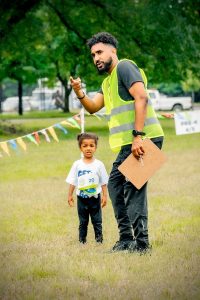
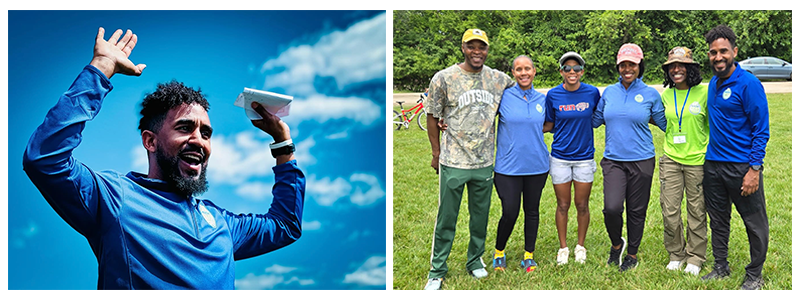
What makes me most proud, though, is our volunteer team. Many of them have been with us for years, and because we’ve worked together for so long, race day has become an incredibly smooth operation. Watching our volunteers greet families by name, encourage every runner, and genuinely take pride in creating a positive experience is something special. They care just as much about these kids as I do, and that’s what has made our series feel like such a strong community.
What’s something you’ve learned, whether a skill, a mindset, or a new perspective, since becoming a Community Coordinator?
I’ve learned that the little things matter.
Taking the extra time to prepare, sending one more reminder email, printing a few extra forms, or double-checking race day details may seem small, but those little efforts make a big difference in creating a positive experience for families.
I’ve also learned that great customer service is really about anticipating people’s needs before they ever have to ask. When families know they’re organized, welcomed, and cared for, they can focus on what really matters which is watching their kids have fun and build confidence.
If you could bring one guest to a race day, real or fictional, who would it be and why?
Without question, I would invite my high school cross country and track coach, Coach Carter.
He introduced me to running when I was a freshman, and it ended up changing the course of my life. What made him special wasn’t just his knowledge of the sport—it was his belief that everyone belonged. If you wanted to run, you had a place on his team. He found a way for every athlete to experience success, regardless of talent or experience.
When I joined the team, he had already been coaching for more than 30 years. Amazingly, nearly 30 years later, he’s still coaching at my high school today. His impact spans generations of runners, and his legacy is undeniable.
I’ve tried to model my own coaching philosophy after his. Running is one of the few sports that’s truly available to everyone, and I want every child who comes through our program to feel like they belong and have the opportunity to discover what they’re capable of. If I can have even a fraction of the impact Coach Carter has had on so many lives, I’ll consider my own life and career a success.